
Women and Gender Studies in the Middle East: A conversation with the editors of the Journal of Middle East Women's Studies: Sherine Hafez, Soha Bayoumi, and Ellen McLarney
Date and Time
Location
The 2018-19 Gender and Sexuality Seminar Series discusses key debates and new approaches to the theory and study of women, gender and sexuality in the Middle East and Islamic World, and the implications of those on the theory and study of women, gender and sexuality in the Global South. The Spring semester will include a sub-series discussing the work and contributions of the late Professor Saba Mahmood, from the perspectives of leading and upcoming scholars in the field. The seminar meets biweekly on Mondays 3-5 p.m., alternating between a speaker events and collective reading and discussion sessions led by the graduate coordinators and faculty members.

Hafez is the author of The Terms of Empowerment: Islamic Women Activists in Egypt (2003), which questioned the applicability of empowerment as defined by western liberal discourse to Islamic women’s activism. Her second book, An Islam of Her Own: Reconsidering Religion And Secularism In Women’s Islamic Movements (New York University Press, 2011), challenges binary conceptions of women’s subjectivities in Islamic movements by relating the interplay between the complex debates of modernity and postcoloniality to the particular historicity of Islam and secularism. She also co-edited the volume entitled, Anthropology of the Middle East and North Africa: Into the New Millennium, (Indiana University Press, 2013). Her articles have appeared in American Ethnologist; Signs: Journal of Women in Culture and Society; Feminist Review; Journal of Middle East Women’s Studies and Journal of North African Studies. Hafez lectures on gender, subjectivity, and revolution in the Muslim World and Middle East, Islamic movements, women’s Islamic activism and in the uprisings in the Arab World.
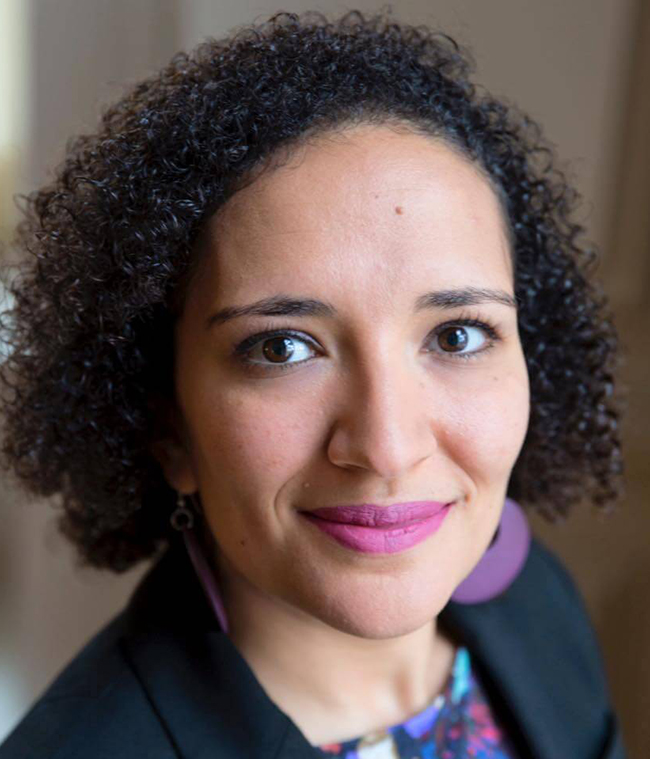
In addition to teaching courses on the history of medicine, public health and gender and sexuality, she has also taught courses in European and American intellectual history, as well as the intellectual history of the modern and contemporary Middle East, with a focus on gender and feminist writing and activism. She is currently finishing a book manuscript (co-authored with Sherine Hamdy, UC Irvine) on the role of doctors in the Egyptian uprising, and working on another book project on the question of health and social justice and the social roles of doctors in postcolonial Egypt.

Her current project uses a cultural studies approach to analyze the media networks cultivated by Islamic communities and institutions in Latin America, as well as related cultural output—films dubbed into Spanish from Farsi and Arabic, Spanish and Portuguese literature revolving around Islamic themes, transnational connections between Beirut and Brazil in the art world, Latin American political movements that invoke Palestine, and a shared political vocabulary of decolonization, social justice, and liberation theology that articulates not just South-South solidarities, but also the contours of a contemporary Latin American Islam.
The seminar is co-sponsored by the Committee on Degrees in Studies of Women, Gender, and Sexuality (WGS), the Science, Religion and Culture Program (SRC), the Mahindra Humanities Center at Harvard, and the Journal of Middle East Women Studies (JMEWS). This year’s seminar inaugurates the residence of JMEWS at Harvard, which extends from May 2018 to May 2022.